Species Spotlight: Lemonpeel Angelfish

Bright Beauty with a Reef-Ready Attitude

Scientific Name: Centropyge flavissima

Species Type: Saltwater Fish

Native Location: Indo-Pacific (from East Africa to the Central Pacific, including reefs of Indonesia and the Philippines)

Introduction: Sunshine with Fins and a Bit of Attitude

If a drop of sunshine decided to grow fins and explore coral reefs, it would probably look a lot like the Lemonpeel Angelfish. Known scientifically as Centropyge flavissima, this dazzling marine fish is a staple in the saltwater aquarium hobby and for good reason.

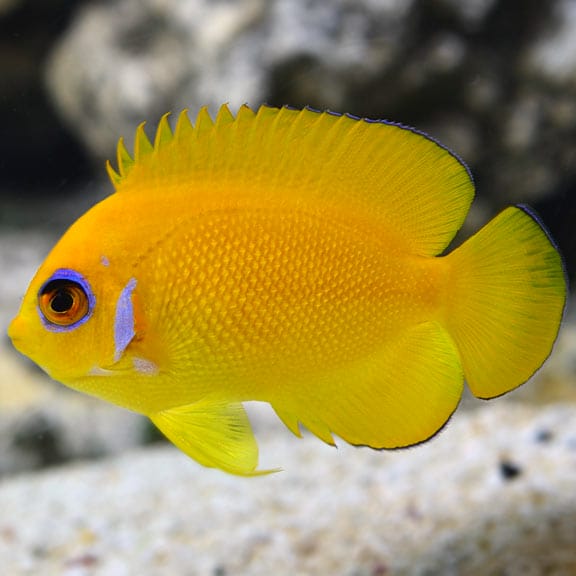
With its electric yellow body, accented by a vivid blue ring around the eye and gill edges, the Lemonpeel Angelfish doesn’t just swim it makes an entrance. Native to the warm, coral-rich waters of the Indo-Pacific, particularly around places like the Philippines and Indonesia, this fish thrives in reef environments packed with hiding spots and grazing opportunities.

But don’t let the cheerful color fool you. Beneath that lemony glow lies a fish with a surprisingly bold personality. Think of it as the “small but spicy” character of your reef tank—like the friend who lights up the party but also insists on choosing the music.

Research Insights: Tiny Fish, Big Scientific Interest

The Lemonpeel Angelfish has been the subject of various marine biology studies, particularly in the areas of reef ecology and fish behavior. As a member of the dwarf angelfish group, it plays a subtle but important role in maintaining reef balance.

Researchers have observed that Lemonpeel Angelfish contribute to controlling algae growth on coral reefs. By grazing on filamentous algae, they help prevent overgrowth that could otherwise smother coral colonies. This makes them a small but meaningful player in reef health.

Additionally, like many members of the genus Centropyge, Lemonpeel Angelfish are protogynous hermaphrodites. That means individuals are born female and can transition to male under certain social conditions – usually when a dominant male is absent. This fascinating adaptation ensures reproductive success in environments where mates may be scarce.

Their behavior has also been studied in relation to territory formation. Lemonpeel Angelfish tend to establish and defend small territories within reef structures, often centered around food sources or shelter.

Unique Characteristics: The Lemon That Stands Out in the Reef Bowl

What makes the Lemonpeel Angelfish truly unforgettable isn’t just its color—it’s the combination of visual flair and personality.

Striking Coloration
The fish’s bright yellow body is complemented by neon-blue highlights around the eyes, lips, and fin edges. This contrast is not just for show—it may play a role in communication and species recognition.

Compact Size, Big Presence
Despite reaching only about 5 inches (13 cm) in length, the Lemonpeel commands attention. It’s proof that you don’t need to be large to be in charge.

Active and Curious Nature
Unlike some more reserved reef fish, Lemonpeels are constantly on the move, exploring rockwork and investigating their surroundings. They’re natural grazers, always picking at surfaces in search of food.

Semi-Aggressive Personality
This is not a shy fish. Lemonpeels can be territorial, especially toward other dwarf angelfish or similarly shaped species. They often establish a “home base” in the rockwork and defend it with surprising determination.
Diet: The Gourmet Grazer with a Taste for Variety

In the wild, Lemonpeel Angelfish are omnivorous grazers with a strong preference for algae and small invertebrates. Their diet consists primarily of:

  • Filamentous algae
  • Diatoms
  • Sponges
  • Tunicates
  • Small crustaceans

In captivity, replicating this varied diet is essential for their health and coloration. A well-fed Lemonpeel is a vibrant Lemonpeel.

Aquarists typically offer:

  • Marine algae sheets (nori)
  • High-quality angelfish preparations containing sponge material
  • Frozen foods like mysis shrimp and brine shrimp
  • Spirulina-based flakes or pellets

Because they are constant grazers, feeding smaller amounts multiple times a day helps mimic their natural behavior and reduces stress.

Size and Tank Requirements: Small Fish, Serious Setup

While the Lemonpeel Angelfish is relatively small, it still requires a thoughtfully designed environment to thrive.

Size

  • Maximum length: ~5 inches (13 cm)

Minimum Tank Size

  • At least 70 gallons (265 liters)

Why such a large tank for a small fish? Because Lemonpeels need space to establish territory and explore. A cramped environment can lead to stress and increased aggression.

Tank Setup Essentials

  • Plenty of live rock for grazing and hiding
  • Stable water parameters (temperature: 72–78°F / 22–26°C)
  • Moderate to strong water flow
  • High water quality with efficient filtration

The rockwork should include caves and crevices, giving the fish multiple hiding spots and helping reduce territorial disputes.

Compatibility: A Bright Beauty with Boundaries

Lemonpeel Angelfish are considered semi-aggressive, which means compatibility requires some planning.

Generally Compatible With:

  • Tangs
  • Clownfish
  • Wrasses
  • Gobies and blennies

Use Caution With:

  • Other dwarf angelfish (especially similar species)
  • Fish with similar body shapes or coloration
  • Passive or timid species

Reef Compatibility
Here’s where things get interesting. Lemonpeels are often labeled “reef-safe with caution.”

They may nip at:

  • LPS corals
  • Soft corals
  • Clams

Not every individual will develop this habit, but it’s a risk worth noting. Providing a well-balanced diet can help reduce the likelihood of coral nipping.

Species Summary: The Lemon That Lights Up Your Reef

The Lemonpeel Angelfish is a standout addition to marine aquariums for several reasons:

  • Brilliant yellow coloration with striking blue accents
  • Active, engaging behavior
  • Useful algae-grazing habits
  • Manageable size for mid-sized tanks

However, it’s not a “set-it-and-forget-it” fish. Its semi-aggressive temperament and potential coral nipping mean it’s best suited for aquarists with some experience.

In the right setup, though, the Lemonpeel becomes more than just a fish – it becomes a centerpiece.

Wrap-up: When Life Gives You Lemons… Add Them to Your Reef

Keeping a Lemonpeel Angelfish is a bit like adding a splash of sunshine to your aquarium—with a dash of personality to keep things interesting.

For hobbyists looking to expand their knowledge and build a thriving marine ecosystem, there’s always more to learn. That’s where Frags 2 Fishes comes in. From expert insights to quality marine life care resources, it’s a hub for anyone passionate about reefkeeping.

Whether you’re just starting your saltwater journey or fine-tuning an established reef tank, the Lemonpeel Angelfish is a species that rewards attention, care, and curiosity.

Leave a Reply