Species Spotlight: Gem Tang

Gem Tang: The Jewel of the Reef Tank

Scientific Name: Zebrasoma gemmatum

Species Type: Saltwater Fish

Native Location: Western Indian Ocean Near East Africa and Madagascar

Introduction: The Reef’s Living Designer Handbag

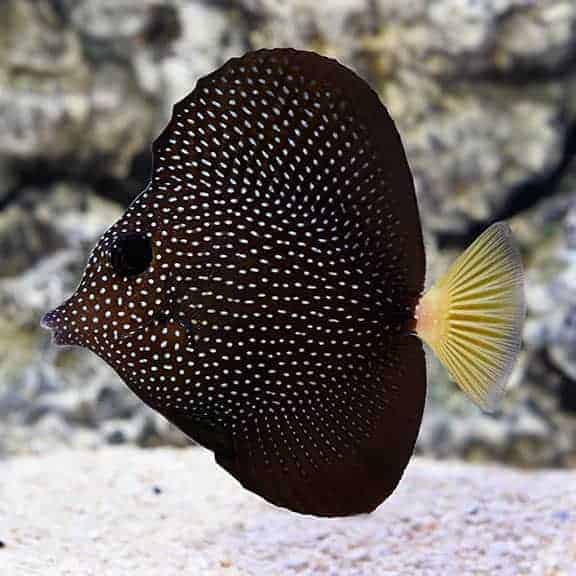
The Gem Tang (Zebrasoma gemmatum) is the reef tank equivalent of arriving at a party in a velvet tuxedo sprinkled with diamonds. Native to the Western Indian Ocean near Madagascar and South Africa, this legendary tang is admired for its deep black body covered in brilliant white spots that resemble stars in the night sky.

Beyond its stunning appearance, the Gem Tang is an active algae grazer that helps maintain balance in marine aquariums. Intelligent, energetic, and full of personality, it quickly becomes the centerpiece of any reef tank.

And yes – it absolutely knows it’s the prettiest fish in the tank.

Research Insights: Stars Beneath the Surface

Marine biologists study species like the Gem Tang because herbivorous fish play a vital role in keeping coral reefs healthy by preventing algae from overtaking coral colonies. Grazing fish such as tangs help maintain balance within reef ecosystems and support coral recovery from environmental stress.

Gem Tangs belong to the surgeonfish family Acanthuridae, known for the sharp “scalpel” spine near the tail used for defense and territorial disputes. Scientists have also observed surprisingly complex social behaviors among surgeonfish in the wild, including group feeding and territorial grazing.

As interest in rare marine species grows, responsible reef keeping continues to emphasize sustainable sourcing, proper quarantine, and long-term care for healthy aquarium populations.

Unique Characteristics: Velvet, Pearls, and Attitude

The Gem Tang’s appearance is undeniably its headline feature, but this species offers far more than visual appeal.

Its most recognizable trait is the stunning constellation of bright white spots scattered across a dark body. Unlike species with stripes or gradients, the Gem Tang’s pattern creates a dramatic contrast that appears almost artificial under aquarium lighting. In blue reef-spectrum LEDs, the fish can look positively unreal.

Juveniles often display subtler coloration, gradually developing stronger contrast and brighter spotting as they mature. Healthy adults exhibit a velvety sheen that gives the species its signature luxurious appearance.

Like other members of the Zebrasoma genus, Gem Tangs possess a laterally compressed body and elongated snout. This specialized shape allows them to navigate narrow reef crevices while efficiently grazing algae from rock surfaces.

Behaviorally, Gem Tangs are highly active and intelligent. They quickly learn feeding routines, recognize familiar environments, and often become one of the most visible fish in the aquarium. Many owners report that their Gem Tang seems permanently involved in everyone else’s business – inspecting rocks, monitoring tankmates, and occasionally acting as the self-appointed reef security officer.

They are also surprisingly athletic swimmers. Given sufficient space, Gem Tangs cruise continuously throughout the aquarium, weaving through coral structures with graceful precision.

And then there is the tail scalpel.

Located near the caudal peduncle is a sharp defensive spine used for protection and dominance displays. While rarely dangerous in home aquariums when handled properly, it serves as an important reminder that beneath the glamorous appearance lies a fish perfectly adapted for survival on competitive reefs.

Diet: The Professional Salad Enthusiast

If the Gem Tang had a restaurant review account, it would almost exclusively rate seaweed.

Gem Tangs are primarily herbivores and spend much of their natural life grazing algae throughout reef environments. In captivity, providing a varied, plant-heavy diet is essential for maintaining both health and coloration.

Marine algae sheets, dried nori, spirulina-based foods, herbivore pellets, and algae-enriched frozen foods should form the foundation of their diet. Frequent grazing opportunities are important because tangs naturally feed throughout the day rather than consuming one large meal.

A healthy Gem Tang should exhibit constant foraging behavior. If one is endlessly pecking at rocks and glass, congratulations — your fish is behaving exactly as nature intended.

Although primarily herbivorous, Gem Tangs may also consume small amounts of meaty foods including mysis shrimp, brine shrimp, and copepods. However, excessive protein without adequate vegetable matter can contribute to digestive issues and reduced health over time.

Proper nutrition directly impacts immune function, coloration, and stress resistance. Like many surgeonfish, Gem Tangs can be susceptible to marine ich and other stress-related illnesses if nutrition or water quality declines.

Aquarists often supplement feeding with macroalgae clips placed around the tank. This not only supports natural grazing behavior but also helps reduce territorial aggression by keeping the fish occupied.

A busy tang is usually a peaceful tang.

Usually.

Size and Tank Requirements: Penthouse Living for a Reef Celebrity

Gem Tangs may not reach the massive proportions of some other tang species, but they still require substantial swimming space and stable reef conditions.

Adult Gem Tangs typically grow to around 8 to 9 inches in length. Because they are constant swimmers, aquariums should prioritize horizontal swimming room over sheer height.

Most experienced aquarists recommend a minimum tank size of 180 gallons for long-term care. Larger aquariums provide greater stability, more grazing surfaces, and additional room for managing territorial behavior.

Strong water movement, excellent oxygenation, and pristine water quality are critical. Gem Tangs thrive in mature reef systems with stable salinity, low nutrient spikes, and abundant live rock.

Ideal conditions generally include:

  • Temperature: 72–78°F
  • Salinity: 1.024–1.026
  • pH: 8.1–8.4
  • Moderate to strong flow
  • Ample rockwork for grazing and shelter

Because tangs are active swimmers, aquascaping should balance open swimming lanes with caves and rock structures. Think “underwater racetrack with occasional salad bars.”

Lighting itself is less important for the fish directly, though reef-spectrum lighting dramatically enhances their spotted appearance.

Due to their sensitivity to stress and parasites, quarantine procedures are highly recommended before introduction into display aquariums. A healthy acclimation period can significantly improve long-term success.

Compatibility: The Elegant Neighbor with Opinions

Gem Tangs are generally considered semi-aggressive, especially toward other tangs or similarly shaped fish.

In reef aquariums, they usually coexist peacefully with many community fish species including clownfish, wrasses, gobies, anthias, and angelfish. However, their territorial tendencies can emerge when space is limited or when competing herbivores are introduced.

The greatest compatibility challenges typically occur with:

  • Other Zebrasoma tangs
  • Surgeonfish with similar body shapes
  • Fish competing for algae territory

That said, success is often possible in sufficiently large aquariums with careful introduction strategies and abundant swimming space.

Many aquarists add Gem Tangs later in the stocking process to reduce territorial dominance. Providing multiple feeding stations and visual barriers can also help minimize aggression.

Fortunately, Gem Tangs are considered reef safe. They generally ignore corals, making them excellent additions to coral-focused marine systems.

Their constant movement also adds dynamic activity to reef tanks. While some fish hide among rockwork for much of the day, Gem Tangs typically remain visible and engaged with their surroundings.

In other words, they fully expect the spotlight.

Species Summary: A Constellation Worth Admiring

The Gem Tang has earned its legendary status within marine aquariums for good reason.

Few fish combine elegance, functionality, intelligence, and reef-safe behavior so effectively. Its breathtaking spotted appearance instantly captures attention, while its algae-grazing habits provide meaningful benefits within mature reef ecosystems.

For experienced hobbyists capable of meeting its environmental needs, Zebrasoma gemmatum offers:

  • Stunning visual contrast
  • Active and engaging behavior
  • Effective algae control
  • Reef-safe compatibility
  • Strong personality and presence

Beyond aesthetics, the species also serves as a reminder of the complexity and beauty of coral reef ecosystems. Every grazing pass across a rock surface mirrors an important ecological role performed on wild reefs throughout the Indian Ocean.

And honestly, few aquarium fish manage to look this sophisticated while spending their entire day eating algae off rocks.

That alone deserves respect.

Wrap-Up: Diamonds of the Deep

The Gem Tang proves that true reef royalty does not require neon colors or dramatic fins to command attention.

With its celestial spotted pattern, active personality, and hardworking grazing behavior, Zebrasoma gemmatum continues to stand among the most admired species in marine aquarium keeping. It combines beauty with purpose, elegance with energy, and sophistication with just enough territorial drama to keep things interesting.

Whether you are fascinated by reef ecology, building a thriving coral system, or simply appreciate fish that resemble living night skies, the Gem Tang remains one of the hobby’s most unforgettable species.

At Frags 2 Fishes, our passion for marine life extends beyond showcasing beautiful species. We are dedicated to helping aquarists better understand the animals they care for and the ecosystems they recreate within their aquariums. From expert guidance and educational resources to equipment and marine care essentials, Frags 2 Fishes supports hobbyists at every stage of the reef-keeping journey – both online and in-store.

Because every thriving reef begins with curiosity… and occasionally a fish that looks like it swam straight out of outer space.

Leave a Reply