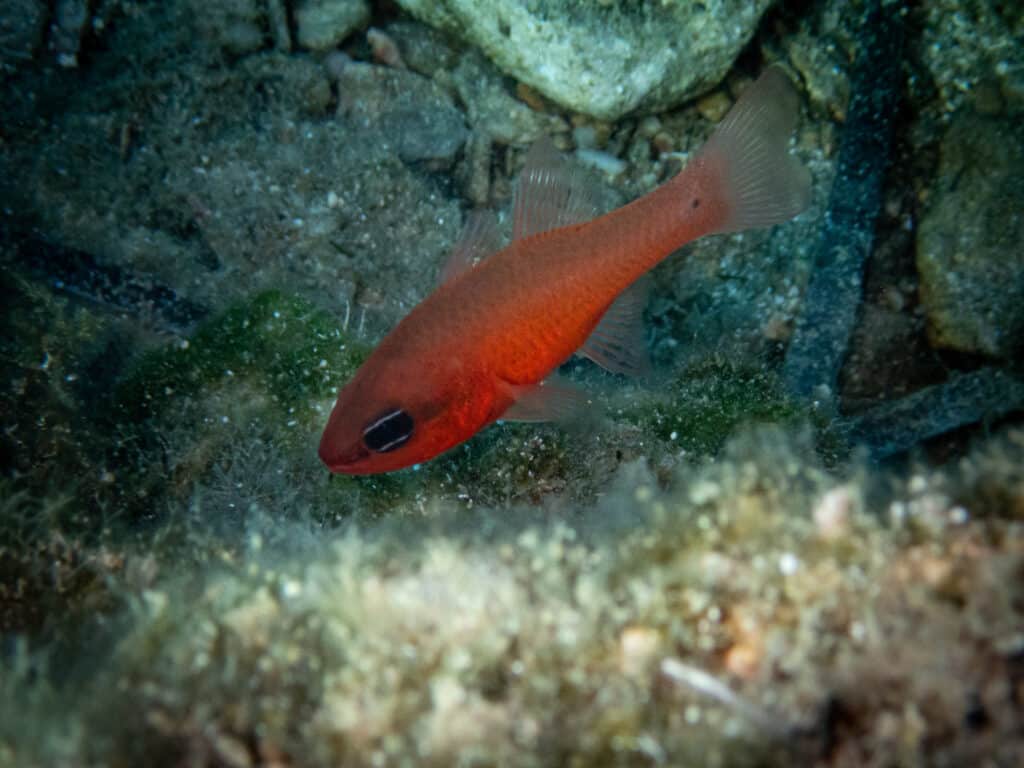
Species Spotlight: Bicolor Blenny

The Curious Perch-Loving Star of Your Reef Tank

Scientific Name: Ecsenius bicolor

Species Type: Saltwater fish 

Native Location: A Saltwater Reef Fish Native to the Indo-Pacific (Indian Ocean to Western Pacific Coral Reefs)

Introduction: The Two-Tone Comedian of the Reef

If reef aquariums had stand-up comedians, the Bicolor Blenny would steal the show. With its curious expression, big eyes, and habit of peeking from rock crevices, this tiny fish is full of personality.

Known scientifically as Ecsenius bicolor, it belongs to the Blenniidae family, famous for their expressive faces. Its signature look features a dark front half and a bright yellow or orange tail, creating a striking two-tone effect.

Native to the Indo-Pacific, Bicolor Blennies perch on rocks, hopping between surfaces while grazing on algae. In aquariums, they’re bold, interactive, and often seem to “watch” their owners.

Despite growing only up to about four inches, this little fish delivers big character to any reef tank.

Research Highlights: The Science Behind the Sass

Marine biologists studying blennies have long been fascinated by their unusual behavior and ecological role on coral reefs.

Research into herbivorous reef fishes highlights the importance of species like Ecsenius bicolor in maintaining reef health. By constantly grazing on algae that grows over rocks and coral surfaces, blennies help prevent algae from overwhelming delicate coral ecosystems. Their constant nibbling effectively acts as natural lawn maintenance for the reef.

Blennies also exhibit intriguing territorial behavior. Studies observing blenny species have found that many individuals establish small “home zones” centered around a preferred hiding hole. From this base, they venture out to graze and quickly retreat if threatened.

Another fascinating insight involves their social signaling. Blennies often communicate with subtle body movements and facial displays. Raising their dorsal fins or opening their mouths can act as warning gestures to rivals who wander too close to their territory.

This complex behavioral repertoire shows that even small reef fish possess surprisingly sophisticated social dynamics. The Bicolor Blenny may look like a goofy cartoon character, but beneath that expression lies a well-adapted reef specialist.

Unique Characteristics: A Fish with Personality (and Eyebrows)

One of the most beloved aspects of the Bicolor Blenny is its distinctive appearance. Unlike many streamlined reef fish, blennies have a slightly elongated body with a large head and expressive facial features.

Several characteristics make this species instantly recognizable:

The Famous Two-Tone Coloration

The Bicolor Blenny’s namesake coloration is its most striking trait. The front half of the body is usually dark brown or deep bluish-purple, while the rear half transitions dramatically into orange or yellow.

This bold color division may help break up the fish’s outline against rocky backgrounds, offering some camouflage against predators.

Oversized Eyes and Expressive Face

Blennies possess large, alert eyes positioned high on the head. This placement allows them to scan for predators while remaining partially hidden inside rock crevices.

Combined with their slightly raised mouth corners, the result is an expression that often appears permanently amused—or mildly judgmental.

Perching Behavior

Rather than swimming constantly, Bicolor Blennies frequently perch on rocks or coral branches, propping themselves up using their pectoral fins. This behavior gives them a relaxed, watchful posture, as if they are casually supervising the entire aquarium.

Lightning-Fast Retreats

Despite their laid-back attitude, blennies are incredibly quick when threatened. At the slightest hint of danger, they dart backward into their favorite hole with surprising speed.

Many aquarists find it amusing that a blenny will repeatedly pop out to observe the tank, only to retreat dramatically whenever something unexpected happens.

Diet: The Algae Gourmet

Bicolor Blennies are primarily herbivores, making them valuable contributors to reef aquarium maintenance.

In the wild, they spend most of their time grazing on microalgae, filamentous algae, and biofilm growing on rocks and coral surfaces. Their small comb-like teeth are perfectly adapted for scraping algae from hard surfaces.

This grazing behavior serves two purposes: it provides the fish with constant nutrition while simultaneously helping to control algae growth on the reef.

In aquariums, Bicolor Blennies will often continue this natural role by picking at algae growing on live rock. However, it is important that they receive a balanced diet beyond natural tank growth.

Typical aquarium foods include:

  • Marine algae sheets or dried seaweed
  • Herbivore pellets or flakes
  • Spirulina-based foods
  • Frozen herbivore blends

Some individuals will also sample small meaty foods like mysis shrimp, though plant-based foods should remain the primary component of their diet.

Providing varied nutrition helps ensure vibrant coloration, strong health, and consistent energy levels.

Size and Tank Requirements: Small Fish, Smart Habitat Needs

Although the Bicolor Blenny is relatively small, its habitat requirements should not be underestimated. Like many reef fish, it thrives best in a stable, well-established aquarium.

Size Matters

Adult Bicolor Blennies typically grow to about 3 to 4 inches (7–10 cm) in length. Because they spend much of their time perched rather than swimming constantly, they do not require enormous open swimming areas.

However, they do require adequate rock structure to create territories and hiding spaces.

A tank of 30 gallons or larger is generally considered appropriate for a single individual.

The Importance of Live Rock

Live rock is essential for this species. It provides:

  • Natural grazing surfaces
  • Hiding holes for security
  • Territory boundaries

Blennies often choose a specific crevice as their “home base” and will return to it repeatedly.

Water Conditions

Stable reef parameters are key for long-term success:

  • Temperature: 72–78°F (22–26°C)
  • Salinity: 1.024–1.026
  • Moderate water flow
  • High water quality

Like many reef fish, Bicolor Blennies do best in mature aquariums where microalgae growth is already established.

Compatibility: The Neighborhood Watch of the Reef Tank

In terms of temperament, the Bicolor Blenny is generally considered peaceful with a dash of attitude.

They are rarely aggressive toward unrelated fish species but may show territorial behavior toward other blennies or fish with similar body shapes.

Generally Good Tankmates

Bicolor Blennies usually coexist well with:

  • Clownfish
  • Gobies
  • Cardinalfish
  • Wrasses
  • Peaceful reef fish

Their calm nature makes them suitable additions to many community reef tanks.

Potential Territorial Disputes

Problems can occasionally arise with:

  • Other blenny species
  • Fish with similar grazing niches
  • Very small timid fish competing for hiding spots

In most cases, keeping only one blenny per tank helps avoid territorial conflicts.

Reef-Safe Considerations

Bicolor Blennies are typically considered reef safe, meaning they generally ignore corals and most invertebrates.

However, in tanks with limited algae or insufficient feeding, some individuals may occasionally nip at certain soft corals or clam mantles. This behavior is uncommon and often linked to dietary deficiencies.

Providing ample algae-based foods usually prevents this issue.

Species Summary: Why the Bicolor Blenny Wins Hearts

When aquarists talk about their favorite “personality fish,” the Bicolor Blenny frequently tops the list.

Several factors make this species particularly appealing:

  • Distinctive two-tone coloration
  • Entertaining behavior and expressions
  • Helpful algae-grazing habits
  • Moderate care requirements
  • Compatibility with many reef tank species

Unlike some more delicate reef fish, Bicolor Blennies tend to adapt well to aquarium life once established. Their curious behavior and bold nature often make them one of the most visible and interactive fish in the tank.

Many aquarists report that their blenny becomes the “face” of the aquarium always visible, always observing, and occasionally giving the impression that it’s judging everyone in the room.

Wrap-up: The Tiny Fish with Big Personality

The Bicolor Blenny proves you don’t need large, flashy fish to make a reef tank shine. Often perched on rocks with curious eyes, this small fish stands out with its two-tone coloration, algae-grazing habits, and playful personality.

Combining beauty, utility, and character, Ecsenius bicolor helps maintain the tank while adding constant entertainment. At Frags 2 Fishes, we celebrate species like this that bring reef aquariums to life—both online and in-store.

And if you spot curious eyes peeking from the rocks… that’s just your Bicolor Blenny on watch.

Leave a Reply